

The Sticker Problem
How Saving the Good Stickers Taught Me to Save Myself for Never

Is this a safe space? Because I have a confession to make.
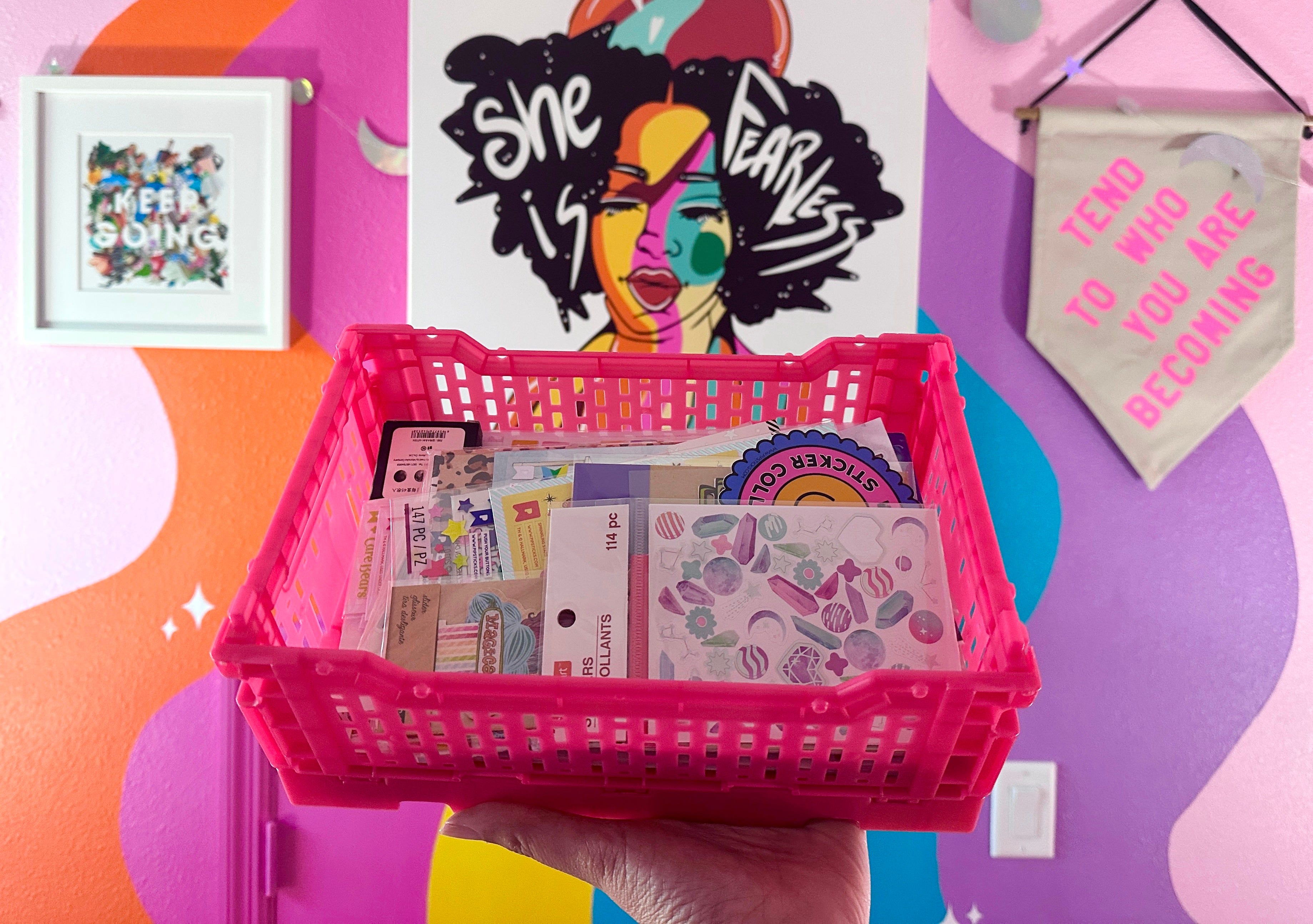
I, Monique Malcolm, am a sticker hoarder.
Inside my office closet is a basket filled with stickers. All types of stickers, die-cut ones, sticker sheets, cool sparkly holographic ones, big puffy ones. I even have a few scratch-and-sniff.
I am hoarding… stickers. An item whose entire job description is: be stuck to other things.
And yet I’ve struggled to use them. Not because I don’t want to, but because I’m following a rule I never agreed to out loud.
The rule says: save the good stickers for something important. Save them for “someday.” For “the right moment.” For something “special enough.”
It’s wild! I’m not afraid to do big things. I’ve done hard shit. But hoarding $2 stickers? Apparently, that’s where I draw the line on my own joy.
And that’s not an accident.
Because the sticker rule was never just about stickers.
Most of the rules running your life were never spoken out loud, which is exactly why they work.
Not laws. Not morals. I’m talking about your rules, the background beliefs we obey without noticing. They’re mostly invisible, usually handed down by a well-meaning parent, teacher, pastor, or productivity-obsessed culture… and if you really think about it, you never explicitly agreed to any of them.
And yet you follow them. Like it’s your job.
Don’t believe me? Quick pop quiz: put a finger down if you’ve ever thought…
I can only do hobbies after I finish my real work.
I can’t start unless I can commit to doing it right.
I can only eat dessert after dinner.
I can only wear my fancy clothes / perfume / lipstick for special occasions.
Rest, play, and pleasure must be earned.
I can’t use the good stickers or notebooks on anything ordinary. (This is me.)
See?! You don’t need a rulebook. The rules are already there.
And if you’re a woman, let’s be honest, the rules found you early.
Here’s the tricky part: these rules feel like common sense.
That’s the trap.
Not wasting the good stickers sounds like being thoughtful.
Saving hobbies for “after” sounds like being responsible.
Doing it “properly” sounds like having standards.
But together, these rules become the operating system you’re living by.
I’m not immune. I didn’t realize I was living by them. I thought this was just what it meant to be a good, responsible adult.
But it doesn’t stop at stickers.
It never did.
That’s the whole point.
Small rules are training wheels for bigger ones
Because when you practice, “I can’t use the good stickers or notebooks on anything ordinary,” you’re not just being careful.
You’re rehearsing scarcity.
You’re rehearsing worthiness.
You’re teaching yourself that joy is a limited resource that has to be rationed… that pleasure must be earned… that your spontaneous desires can’t be trusted.
That becomes the default.
The same muscle memory that later sounds like:
“I can’t take a sabbatical until I’ve saved six months of expenses AND the kids are grown AND the project is complete.”
“I can’t leave this relationship until I’m absolutely certain there’s nothing more I could have done.”
“I can’t pivot careers until I’ve exhausted every option in my current path.”
Same logic. Bigger consequences.
Here’s how it works.
Low-stakes rules: disposable things
It starts with low-stakes rules around disposable things—stickers, fancy soap, the “good” notebooks.
The cost of breaking the rule is minimal. Worst case, you “waste” a $2 sticker.
But even here… you don’t break it.
And that’s the lesson you internalize: following the rule feels safer than the guilt of breaking it, even when the rule serves no one.
So the rule gets promoted.
Medium-stakes rules: hobbies and creative pursuits
Now the rules show up in your hobbies and creative life:
“I can’t paint unless I have two uninterrupted hours and the proper setup.”
“I can’t perform karaoke unless I can actually carry a tune.” (Thankfully, this is a rule I’ve ignored.)
“I can’t try pottery until I research the best studio and learn the techniques.”
The cost is higher now. These rules don’t just protect you from “wasting” supplies; they steal time and experiences you don’t get back.
But the logic is identical to the sticker rule. It’s just wearing a more sophisticated outfit.
High-stakes rules: the architecture of your life
And then quietly, the rules move into the architecture of your life:
“I can’t pursue this dream until conditions are perfect.”
“I can’t say no to this obligation because I said yes once.”
“I can’t want something different than what I built my life around.”
Now the cost is measured in years. In paths not taken. In the growing whisper of: who am I beyond what I do for everyone else?
Same logic, higher cost.
Because you’re not learning different rules. You’re getting better at following the same one. The one that says your desires are suspicious and your joy can always wait.
And once you accept that your joy needs permission for something as small as a sticker… you’ll start accepting it for something as large as your life.
First, you save the sticker. Then you save yourself for later.
How the small rules become law
This is how the small rules become law: they don’t just limit your hobbies. They build a whole belief system.
Here are four ways it happens:
They create a permission economy
When you only let yourself use stickers on “important” things, you’re practicing the belief that pleasure must be budgeted and that you can’t be trusted with abundance.
So you start living like joy has a checkout counter.
That turns into:
I can rest when everything is done. (Never.)
I can spend money on myself when I’m “caught up.”
I can have fun when I’ve proven I deserve it.
They build an inner bureaucracy
Every impulse requires paperwork:
Is this worthy? Did I do enough first? Will this count?
That mental admin is exhausting, which means the rule starts “protecting” you from risk by keeping you busy evaluating instead of doing.
Then bigger opportunities show up (start the class, join the group, try the thing, launch the project), and the same inner bureaucracy says:
Not yet.
Do more research.
Get your ducks in a row.
Wait until you can do it consistently.
They normalize self-abandonment
Every time you choose the rule over the desire, you practice the betrayal.
It starts small: skip the sticker, skip the hobby, save it for later.
Then it scales up: shrink your preferences, stay in roles too long, never make the big ask.
Small self-betrayals are how big self-betrayals become believable.
They create their own evidence
This part is sinister: rules don’t just restrict you. They manufacture proof.
You rarely journal → “See? You’re not a journal person.”
You never use the stickers → “See? You’re not creative.”
You delay hobbies → “See? You don’t have time for yourself.”
Rules create the outcome… and then point to the outcome as evidence that the rule was right.
That’s how they get rigid. That’s how they make themselves true.
A rule is a groove you wear into your life.
At first, it’s tiny—stickers only for important things. But you walk that path long enough, and it becomes the only path that feels natural. Everything else starts to feel irresponsible, indulgent, or “wrong.”
And once “wrong” becomes your body’s reaction to joy… the rule doesn’t need to be enforced.
You become the enforcer.
This is where hobbies stop being cute and start being crucial.
Why hobbies are where this gets exposed
Hobbies are where this whole thing gets exposed because the stakes are finally low enough for you to see the pattern.
A hobby isn’t a performance review. It’s not a moral test. No one’s grading you. No one’s keeping score. The consequences are laughably small.
Which is exactly why the rules become impossible to justify.
If the only thing on the line is a $2 sticker or a half-finished sketch… why does it feel so loaded?
Hobbies reveal what your rules were never really about:
They have no real consequences, which shows the rules were never about consequences.
They’re purely for joy, which shows how deep the belief goes that joy must be earned or explained.
They require nothing but showing up, which reveals all the hidden shoulds you’ve wrapped around showing up: do it right, do it consistently, do it beautifully, do it in a way that counts.
In other words, hobbies are the perfect mirror.
Because if you need permission to stick a sticker… what else have you been waiting for permission to want?
A new rule
I must be in a sharing mood today because I have another confession.
For years, I’ve wanted to be a person who journals consistently. But as a child of the 90s raised by Doug Funnie, my rules said it only counted if I could sit down every day and pour out pages of Dear Journal prose like I was narrating my life for Nickelodeon.
Madness.
Because I know that’s not sustainable for me. And more importantly, it wasn’t a journaling problem. It was a rule problem.
So I broke up with that rule and replaced it with a new one:
2–3 sentences a day counts.
They can be about anything.
Even something as mundane as the delicious soft pretzel I ate at the zoo… (so good I ate a second one).
And here’s what actually changed:
I stopped waiting for perfect conditions before claiming the identity.
I stopped acting like I had to earn the right to be “a journal person” by performing consistency at an Olympic level. I let the smallest version count, and then I practiced showing up like the person I said I wanted to be.
That’s the part people miss. Breaking a small rule isn’t a cute productivity hack. It’s a decision about who gets to be in charge: your old conditioning, or you.
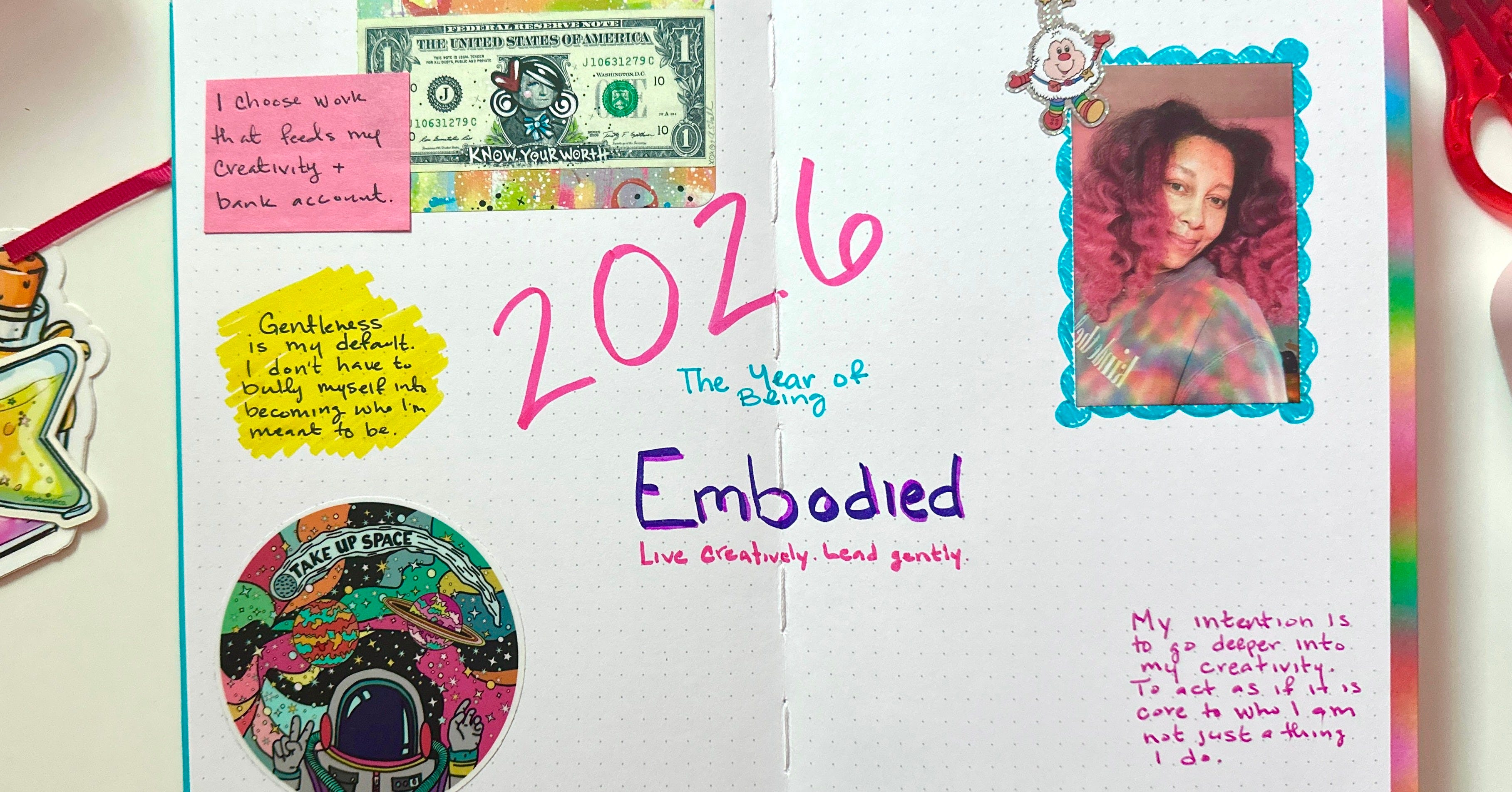
I used this same logic when I decided to build GYNAH before I had it all figured out. Hell, I’m still figuring it out.
And you don’t have to solve the big rules first.
You practice on the small ones.
Ten minutes counts.
Tuesday is special enough.
Use the good supplies.
Start before you feel ready.
Do it badly on purpose.
You prove to your nervous system that joy is safe. You build trust with yourself in tiny, low-stakes moments… until “I’m allowed” starts to feel true everywhere.
These aren’t separate rules for separate domains. They’re the same rule wearing different masks.
The rule that says save the good stickers is the same rule that says save yourself for later, for when you’ve earned it, for when conditions are right, for when you finally feel ready.
But there is no later.
There’s only now… and the rules that convince you to waste now on waiting.
When you practice breaking the small rules, you’re not just reclaiming hobbies. You’re breaking the agreement you made somewhere along the way that your desires need permission, that joy must be justified, that you are the one thing in your life that can always wait.
Hobbies are where we practice because the stakes feel low enough to risk it.
But the permission?
That transfers.
So the real question is: what’s your sticker?
If you want to share, tell me your sticker in the comments.
Thank you for sharing
This hit hard. Thanks for sharing your writing.